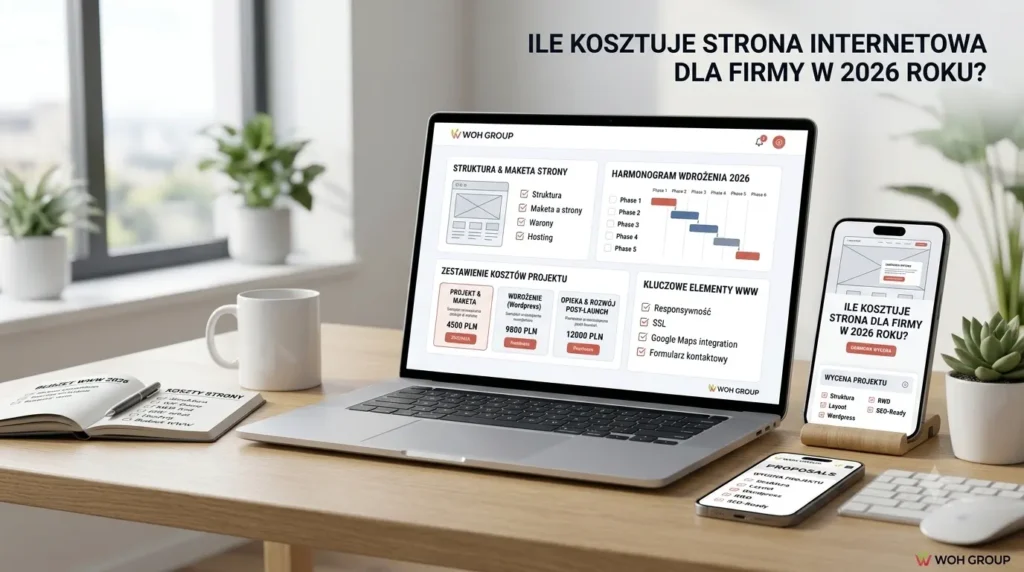
A small business website in the UK can cost a few hundred pounds or several thousand. Those figures describe very different products. A useful quote covers planning, structure, content, design, development, testing and the foundations needed to generate enquiries after launch.
What affects the cost of a business website?
Scope is the biggest factor. A focused landing page is not the same project as a service website with case studies, a knowledge hub, multilingual content and CRM integration. The quality and readiness of your copy, photography and brand assets also affect the amount of work required.
The design approach matters too. A carefully adapted framework can be efficient, while a fully bespoke UX and interface requires more research and design time. Booking systems, payments, customer portals, advanced forms and third-party APIs add implementation and testing.
- number of unique pages and layouts
- bespoke UX/UI or adaptation of an established system
- copywriting, photography and brand assets
- multilingual setup and translation workflow
- forms, CRM, booking and payment integrations
- technical SEO, analytics, performance and quality assurance
Typical UK website price ranges
The ranges below are useful for initial budgeting. Always compare the actual deliverables, ownership terms and support included in each proposal.
| Project type | Indicative budget | Typical scope |
|---|---|---|
| Landing page or simple brochure site | £800–£2,500 | Focused content, enquiry form, mobile build and basic SEO |
| Small business WordPress website | £2,500–£6,000 | Several pages, design, development, analytics and handover |
| Custom service website | £5,000–£12,000 | Bespoke layouts, content support, case studies and integrations |
| Portal or web platform | from £12,000 | Custom workflows, user roles, integrations and extended testing |
What should a professional quote include?
A strong proposal explains who is responsible for structure, copy, design, mobile behaviour, migration and testing. It should also confirm ownership of the domain, hosting account, licences, source files and analytics properties.
For a redesign, ask how existing URLs and search visibility will be protected. A launch without redirect mapping can remove pages Google already understands. You should also know what training, warranty and post-launch support are included.
- clear page and feature scope
- timeline and approval stages
- revision allowance
- responsibility for content and media
- SEO, analytics and testing deliverables
- warranty, maintenance and future development terms
Ongoing website costs
Allow for domain renewal, suitable hosting, backups, security monitoring and software updates. A brochure website may require modest ongoing support, while an ecommerce or lead-generation site deserves more proactive maintenance because downtime directly affects revenue.
Content and SEO are separate growth activities. A technically sound launch gives you a platform, but competitive visibility normally requires useful service pages, case studies and expert content published over time.
How to compare web design proposals
Compare outcomes rather than page counts. A low quote may exclude copy, mobile refinements, image optimisation, analytics, licences or migration. A high quote is only justified when the process and deliverables solve a real business need.
Prepare a short brief covering your audience, offer, required actions, integrations, preferred examples and target launch date. This gives each supplier the same starting point. Review relevant case studies and ask who will actually deliver the work after the sales call.
Need a practical website quote?
WOH GROUP designs and develops WordPress websites for UK businesses, covering structure, implementation, SEO foundations, hosting and ongoing support.